
yoga for immune support
all of yoga podcast · episode 45
When I first started teaching yoga (I won't say when 👀), I almost never got asked about the immune system.
Fast forward to now, and the following question - or a variation of it - comes up almost weekly: "How can yoga support my immune system?"
Whether it's feeling like you've just recovered from one bug and then you go down with another, or you're struggling with a suspected autoimmune disorder, the immune system seems to be central to our awareness of how we are.
A resilient immune system:
1. Responds quickly to genuine threats
2. Does not overreact to harmless stimuli
3. Switches off inflammation when appropriate
4. Returns to balance after illness
And yoga can help build immune resiliency 🥳 - we explore how in this episode!
lunchtime yoga reset
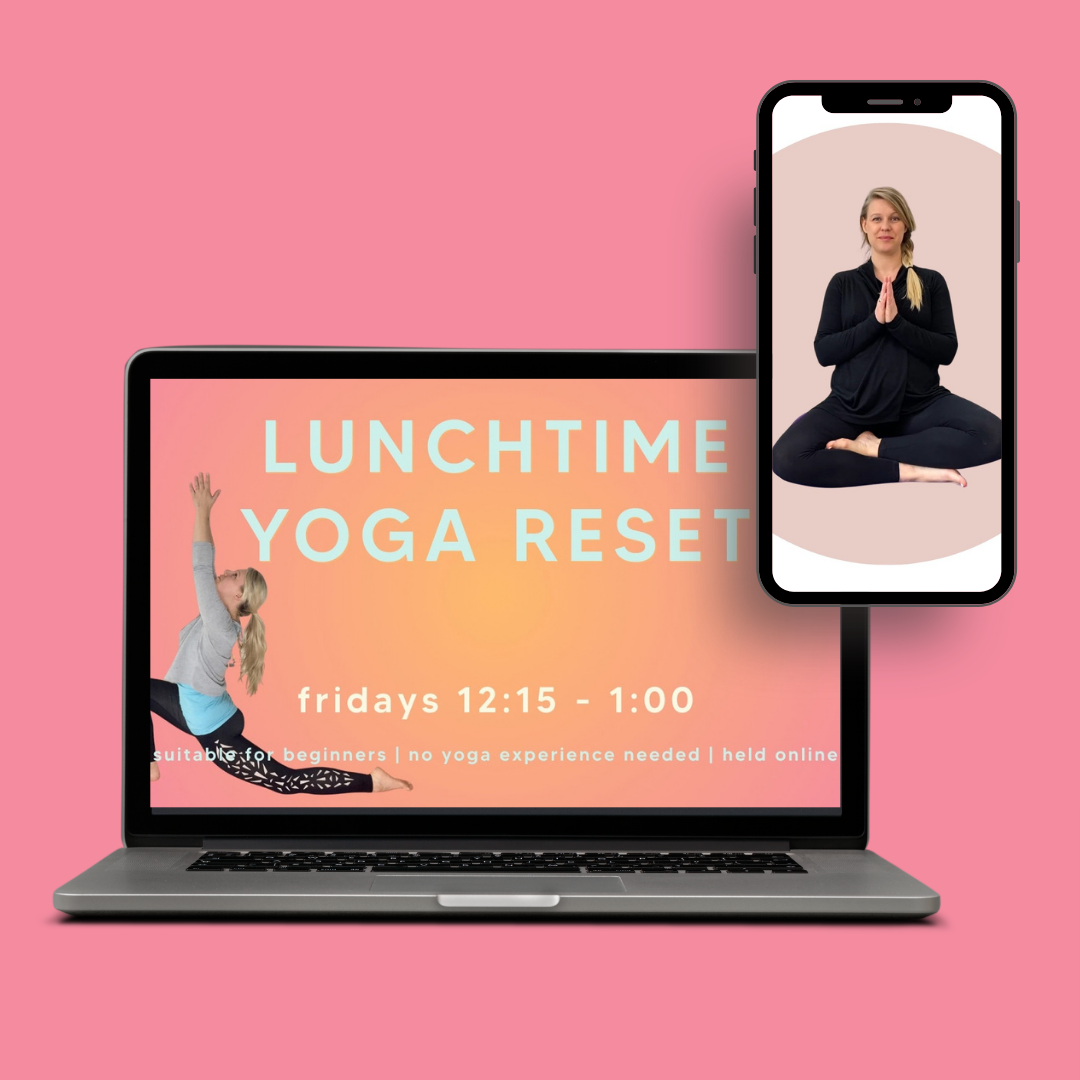
Make your lunch break a proper break
We’ll start with a grounding meditation, move through poses to free up your shoulders, spine and hips, and build a little strength along the way. Then we’ll finish with one of my signature relaxations - a chance to let go and enjoy a few quiet moments before returning to your day.
You don’t need to be flexible or have done yoga before. I’ll offer options so you can find what feels right for you, whether you’re feeling full of beans or a bit pooped.
Beginners welcome. Camera on or off - it’s up to you.
£7.50 per class or five for £25.
listen to
yoga for immune support
where you get your podcasts
what about stress?
Chronic stress can unfortunately disrupt immune function.
When stress is ongoing:
cortisol levels remain elevated
inflammation may increase
recovery and healing can slow down
the immune response becomes less balanced
This is because the nervous system and immune system are closely linked.
Transcript - yoga for immune support
Okay, so I find this such an interesting topic. Yoga for immune support, the immune system is like, is so [00:01:00] unbelievably complex and really it seems like scientists and researchers are just at the tip of understanding. The workings of the immune system and how this system interacts with other systems in the body, and also how it's affected by modern life and stress. But one thing that seems to be becoming increasingly clear. Is that practicing yoga is wonderful for immune support. Alright, so what do I mean by immune support? Well, I'll explain that in a minute, but first let me just tell you that in this episode I'll start with an introduction to the immune system.
So from experience, most people are reasonably familiar with. The kind of top level of the immune system, but we'll cover the basics. Then we'll go on to talk [00:02:00] about what a well-functioning immune system looks like, and what immune support is.
And then I'll talk a bit about why yoga is such an incredible tool. for supporting our immune health. spoiler alert, this is along the lines of stress management, being able to connect with how you feel and what you need, and so much more.
And if you find yourself nodding along with what we talk about in the stress and immune section, then you'll want to join my free workshop, yoga in the Brain, why Yoga Changes the way you think and feel. There's much more information about that in the show notes. Okay, let's get cracking
an introduction to the immune system. So possibly when you think about the immune system, you are thinking about fighting off illness, viruses, bacteria getting sick or [00:03:00] not getting sick, and all of that lives in the immune system, but it's doing so much more than that. Really, at its core, your immune system is constantly assessing what belongs here and what doesn't.
It's constantly determining what is self and what is non-self, and then responding accordingly, And it works in layers or stages. So first off is the innate immune system. This is the first line of defense. It's fast and non-specific. And then you have your adaptive immune system, which is slower to respond, but it's much more targeted.
It's much more specific. And it's able to learn from past exposures. So every time you encounter something that doesn't belong, anything that is non-self, your adaptive immune [00:04:00] system is learning and adapting and responding.
What is a well-functioning immune system? Well, a well-functioning immune system is responsive. It's able to deal with things that are genuine threats and it's adaptable. It's able to learn and adjust and underactive immune system can leave you vulnerable to illness, but an overactive immune system can lead to chronic inflammation, allergies, or autoimmune conditions.
So what we are talking about in terms of a well-functioning immune system is building immune system resilience, building your body's ability to respond appropriately, and then the important bit, return back to balance [00:05:00] afterwards.
What happens in times of stress?
Okay, let's bring stress into the picture now, because this is where things get quite interesting, as we've talked about on the podcast many, many times. When you are stressed, especially when you are experiencing chronic stress, your body shifts into a survival state, and in the short term, this is actually super helpful.
Your immune system is more activated to deal with immediate threats, but. Over time, chronic stress, this kind of survival state will start to dysregulate the immune system. And as a result, you might experience, like I talked about just a moment ago, increased inflammation. So inflammation is bringing immune cells to areas of injury or infection.
It removes the damaged tissue and it supports healing in the [00:06:00] short term, but in the long term, that process can become toxic.
Also in times of chronic stress, you might experience a reduced immune defense. So getting poorly more often, you might experience slower healing. So feeling like it takes you ages to get over a bug or a cook or a knock than it would do normally. And this happens because hormones like cortisol, the stress hormone, interact directly with immune cells.
The brain, the nervous system and the immune system are constantly communicating about what is the highest priority. And the highest priority will always be your survival. So when we're in that survival state, parts of the immune system have to take a backseat. Essentially, if your system is always on high alert, then your immune system will be two, and so it deprioritizes longer term [00:07:00] healing.
So where does yoga come in? Well, this is where yoga becomes incredibly powerful because yoga can help to regulate the systems that influence immunity. let's take a look at how one. Yoga helps regulate the nervous system practices like slow movement. Elongating your breath, focusing on your breath, lifting alone, your heart rate, all things that we naturally do in your standard yoga class.
These activate the parasympathetic nervous system, the rest and repair state, and that takes you out of that survival state we talked about earlier. Two Yoga reduces chronic stress load. A reasonably regular yoga practice will consistently bring their prefrontal cortex back [00:08:00] online.
This is the part of the brain that's responsible for rational thinking, and this reduces amygdala driven, fear driven stress responses. Over time, this lowers the overall stress burden on the body. So there's more bandwidth for things like looking after the immune system. Yoga supports inflammation regulation.
Research is suggesting that yoga can help modulate inflammatory markers. Things like cytokines, which can play a key role in immune function, and making sure that we don't tip into chronic inflammation.
Yoga helps you tune into your body and your needs, so you are more likely to notice, oh, I need rest. Or I feel like I'm getting run down, or I need to slow down a little bit and respond accordingly. In summary, this is all about [00:09:00] creating the best possible conditions for the body and all of its systems to function well.
If you are listening to this and thinking, I'm just getting one bug after another at the moment, or I feel really run down, then definitely join my free workshop, yoga In the Brain.
Why Yoga Changes the way you think and feel? We go so much deeper into how stress affects the brain, why it can feel hard to innovate. Comm, just relax. But it's not impossible.
And little practices that you can do for your long-term health, you'll find the link in the show notes.
So bringing all of this together, yoga helps provide immune support by helping your stress regulation by reducing chronic stress load. By managing [00:10:00] inflammation and all, in all, creating the best possible conditions for your bodily systems to work as well as they possibly can. I really hope that you've found that you useful.
If you have any questions, please don't hesitate to shout. I'll always try my best to help and as always, happy practicing.